
Episode 720 • 34 min
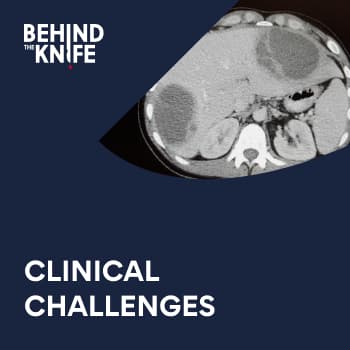
Clinical Challenges in Hepatobiliary Surgery: Bilateral Colorectal Liver Metastasis
Share
Hosts
Anish J. Jain MD (@anishjayjain) is a T32 Research Fellow at the University of Texas MD Anderson Cancer Center within the Department of Surgical Oncology.
Timothy E. Newhook MD, FACS (@timnewhook19) is an Assistant Professor within the Department of Surgical Oncology. He is also the associate program director of the HPB fellowship at the University of Texas MD Anderson Cancer Center.
Jean-Nicolas Vauthey MD, FACS (@VautheyMD) is Professor of Surgery and Chief of the HPB Section, as well as the Dallas/Fort Worth Living Legend Chair of Cancer Research in the Department of Surgical Oncology at The University of Texas MD Anderson Cancer Center
Learning Objectives:
· Develop an understanding of patient selection for surgical resection of bilateral colorectal liver metastasis (CLM).
· Develop an understanding of the use of Two Stage Hepatectomy (TSH) versus Parenchymal Sparing Hepatectomy (PSH) in the treatment of bilateral CLM.
· Develop an understanding of if and when to use ablative procedures for resection of bilateral CLM.
· Develop an understanding of selection and management of patients who suffer recurrence after resection of bilateral CLM.
Suggested Readings
· Omichi K, Shindoh J, Cloyd JM, Mizuno T, Chun YS, Conrad C, Aloia TA, Tzeng CD, Vauthey JN. Liver resection is justified for patients with bilateral multiple colorectal liver metastases: A propensity-score-matched analysis. Eur J Surg Oncol. 2018 Jan;44(1):122-129. doi: 10.1016/j.ejso.2017.11.006. Epub 2017 Nov 24. PMID: 29208318; PMCID: PMC5742306.
https://pubmed.ncbi.nlm.nih.gov/29208318/
· Kawaguchi Y, Kopetz S, Tran Cao HS, Panettieri E, De Bellis M, Nishioka Y, Hwang H, Wang X, Tzeng CD, Chun YS, Aloia TA, Hasegawa K, Guglielmi A, Giuliante F, Vauthey JN. Contour prognostic model for predicting survival after resection of colorectal liver metastases: development and multicentre validation study using largest diameter and number of metastases with RAS mutation status. Br J Surg. 2021 Aug 19;108(8):968-975. doi: 10.1093/bjs/znab086. PMID: 33829254; PMCID: PMC8378514.
https://pubmed.ncbi.nlm.nih.gov/33829254/
· Nishioka Y, Paez-Arango N, Boettcher FO, Kawaguchi Y, Newhook TE, Chun YS, Tzeng CD, Tran Cao HS, Lee JE, Vreeland TJ, Vauthey JN. Neither Surgical Margin Status nor Somatic Mutation Predicts Local Recurrence After R0-intent Resection for Colorectal Liver Metastases. J Gastrointest Surg. 2022 Apr;26(4):791-801. doi: 10.1007/s11605-021-05173-0. Epub 2021 Nov 1. PMID: 34725784.
https://pubmed.ncbi.nlm.nih.gov/34725784/
· Passot G, Chun YS, Kopetz SE, Zorzi D, Brudvik KW, Kim BJ, Conrad C, Aloia TA, Vauthey JN. Predictors of Safety and Efficacy of 2-Stage Hepatectomy for Bilateral Colorectal Liver Metastases. J Am Coll Surg. 2016 Jul;223(1):99-108. doi: 10.1016/j.jamcollsurg.2015.12.057. Epub 2016 Jan 18. PMID: 26968325; PMCID: PMC4925205.
https://pubmed.ncbi.nlm.nih.gov/26968325/
· Donadon M, Cescon M, Cucchetti A, Cimino M, Costa G, Pesi B, Ercolani G, Pinna AD, Torzilli G. Parenchymal-Sparing Surgery for the Surgical Treatment of Multiple Colorectal Liver Metastases Is a Safer Approach than Major Hepatectomy Not Impairing Patients' Prognosis: A Bi-Institutional Propensity Score-Matched Analysis. Dig Surg. 2018;35(4):342-349. doi: 10.1159/000479336. Epub 2017 Oct 14. PMID: 29032372.
https://pubmed.ncbi.nlm.nih.gov/29032372/
· Lillemoe HA, Kawaguchi Y, Passot G, Karagkounis G, Simoneau E, You YN, Mehran RJ, Chun YS, Tzeng CD, Aloia TA, Vauthey JN. Surgical Resection for Recurrence After Two-Stage Hepatectomy for Colorectal Liver Metastases Is Feasible, Is Safe, and Improves Survival. J Gastrointest Surg. 2019 Jan;23(1):84-92. doi: 10.1007/s11605-018-3890-y. Epub 2018 Aug 6. PMID: 30084064; PMCID: PMC6329635.
https://pubmed.ncbi.nlm.nih.gov/30084064/
· Panettieri E, Kim BJ, Kawaguchi Y, Ardito F, Mele C, De Rose AM, Vellone M, Chun YS, Tzeng CD, Aloia TA, Giuliante F, Vauthey JN. Survival by Number and Sites of Resections of Recurrence after First Curative Resection of Colorectal Liver Metastases. J Gastrointest Surg. 2022 Dec;26(12):2503-2511. doi: 10.1007/s11605-022-05456-0. Epub 2022 Sep 20. PMID: 36127553.
https://pubmed.ncbi.nlm.nih.gov/36127553/
***Fellowship Application - https://forms.gle/5fbYJ1JXv3ijpgCq9***
Please visit https://behindtheknife.org to access other high-yield surgical education podcasts, videos and more.
If you liked this episode, check out our recent Hepatobiliary Surgery episodes here: https://app.behindtheknife.org/podcast-category/hepatobiliary
Greetings, everyone. Welcome to another HPV episode on Behind the Knife. This is your HPV team at the MD Anderson Cancer Center in Houston. I'm Anish, a T32 fellow here at MD Anderson, and I'm excited to be joined again by my mentors, Dr. Tim Newhook, the Associate PD of our HPV Fellowship, and Dr. Jean Nicolas Vautier, our HPV Section Chief. Speaker 1: Today, we'll be discussing bilateral colorectal liver metastases. Specifically, we'll discuss if and when resection is justified. different approaches, including the two stage hepatectomy, parent convalescing hepatectomy, and what to do for patients who might recur after bilateral resection. So, to get started off, Dr. Speaker 1: Newhoop, can and should we resect bilateral colorectal liver metastasis? What is the historical challenges associated with bilateral colorectal liver metastasis? Speaker 2: Thank you for that, Aneesh. That's a question to which I would at first say not enough information. With regards to should we resect bilateral colorectal liver metastasis, I think that question needs to be taken into
context of the entire patient because it's not necessarily just a technical exercise. Speaker 2: I think overall our approach to these patients is what can we as HPV surgeons offer patients to allow for survival that is better than chemotherapy alone, right? So that comes down to two things. Is it biologically justified? Will that offer from a biologic perspective better outcomes, but also from a safety standpoint? Speaker 2: Things that might be difficult for these patients need to be taken into both of those two questions, right? So, the technical ones are what you may think about from residency in terms of what's safe liver surgery. I will say, historically, I remember starting to train that there were even some textbooks that I saw in our resident library that said bilateral colorectal liver metastases was an absolute contraindication to resection. Speaker 2: I believe that's old data that Dr. Boateng may get into. But I remember learning that, and we've learned over time with a lot of contributions made from multiple people,
primarily Dr. Votay, that show that that's not the case. So technically speaking, things that matter are ability to clear all disease. Speaker 2: Ability to clear all disease in a safe fashion requires making sure that patients are left with enough liver left over to support them. So thinking about liver volume is a key part of the approach to these patients. Whether the juice is worth the squeeze is a biologic question, so Things like response to chemotherapy, if these patients are on chemotherapy, looking at their biologic profiles, to try to minimize short disease free intervals are really Speaker 1: important. Speaker 1: Thanks for expanding upon that, Dr. Newhook, and like you mentioned, there are definitely still some textbooks, mostly older, that say that, you know, we should be very cautious in resecting patients bilateral colorectal liver meds for a lot of the reasons that you outlined. Dr. Botet, what I want to ask you, though, is, what are some of the Specific characteristics that might make you say we shouldn't resect this patient with bilateral
disease. Speaker 3: So, I think what, when you look at a patient with bilateral liver metastasis, you have to look at it based on really the classic prognostic factors of outcome, which have been described in the past and have been used over and over. And there was a colorectal risk score that was established a long time ago, which is now. Speaker 3: a sort of passé because we're not looking so much at whether the tumor is synchronous or metachronous. So we're not looking so much whether we have a very, very high CEA, but we look really now at size and number of metastasis as continuous variable. If you look at the past prognostic, prognosticators, they were all always using. Speaker 3: A dichotomous variable, but now we use continuous variable and this is a, this has been really well looked at in a paper called Metro Ticket
for colorectal liver metastasis, looking at size and number of metastasis. And on top of it, a yes, no factor, which is whether the patient has, has a mutated RAS in the tumor, in the primary or in the metastasis, because there's concordance between the primary and the metastasis. Speaker 3: So, so that's what we look at generally when we see patients. And then you can look at all the other mutations. But whether the tumor is present on one side, or on both sides, or the tumors are present one side on both sides, it seems not really relevant. It's more like an anatomic finding. Speaker 1: Understood. Speaker 1: Thank you, Dr. Botet. So, those are some of the things that we look at in deciding if we should resect a patient, and if it's really justified, or as Dr. Newhoop said, is the juice worth the squeeze. So once we, let's say once we've decided that, okay, this patient with bilateral colorectal liver metastasis is a good surgical candidate. Speaker 1: There are a few approaches that we can
pursue in order to perform that resection. One of the major approaches is the two stage hepatectomy, which was first described by Adam et al. in 2000. And briefly, the way it works is you would perform a first stage resection. Mostly, you would do a perinecomlisparing resection of some of the left sided hepatic lesions. Speaker 1: Then after that you perform a portal vein embolization for the right liver and the idea behind that as we discussed in our previous episode is essentially to get the left side of the liver to hypertrophy to compensate for the degeneration of the right side of the liver that no longer has the portal venous flow. Speaker 1: And then about six to eight weeks later. You would come back and you would do a right hepatectomy or major resections on the right side to clear the remaining disease and ideally with this two stage resection clear all the disease the patient has on both sides of the liver. So Dr. Nook, my question for you is, what are some factors that are
associated with a safe and efficacious two stage Speaker 2: hepatectomy? Speaker 2: So, like I said, Aneesh, from the very beginning is making sure that we can leave a patient with enough liver left over to support them. As you mentioned, there are multiple different approaches to this. One of the most classic is a two stage hepatectomy. But I think it's important that all approaches are considered, at least that are within the surgeon's toolbox. Speaker 2: Those include two stage hepatectomy, parenchymal sparing hepatectomy, in some centers ALPS, which we won't discuss in this podcast. And then some centers as well use different types of approaches for regional therapy. The point is that we want to make sure that we're doing a safe operation for these surgeries, for these patients, sorry. Speaker 2: Clearly, in the paradigm of a classic Tuesday trypotectomy, The ability to clear all disease in the left liver is critical. So, we're not going to leave a patient with multiple untreated tumors unless it is something that's planned beforehand for a paradigm which we use sometimes using
completion ablation. Speaker 2: But I think that that's above this podcast. Maybe next time. But the key is to be able to remove the tumors that are in the left liver and leave them with enough liver to hypertrophy and that includes inflow, outflow, and biliary drainage from the left side. Background liver health and quality is also important because Patients who've had either liver injury from chemotherapy, background liver injury from various hepatitis can, or alcohol or things like that can lead to an inability of the liver to, to grow, and so therefore we need to be, make sure that we're stratifying patients for these procedures up front. Speaker 2: The number of resections that are required in the left liver is important as well. We've published on Factors that are associated with the ability of the left liver to grow after a portal vein embolization within the paradigm of a two stage hepatectomy. And the number of lesions that were previously resected matter because it
may impair regeneration dynamics afterwards. Speaker 2: And also patient comorbidities are important as well, such as uncontrolled diabetes. BMI. But just to refine that comment. Those risk factors that I mentioned weren't necessarily risk factors for post hepatectomy liver insufficiency after the second stage. They were for non growth, non hypertrophy, after a right portal vein embolization. Speaker 1: Okay, okay. Alright, so Dr. Vijay, what do you think are some factors, other factors that might make it so that a patient doesn't make it to the second stage or complete their two stage hepatectomy? Speaker 3: I want to go back a little bit first to the definition of resectability and put it maybe in the context, puts the two stage hepatectomy in the context of the definition of resectability. Speaker 3: Two stage hepatectomy was really proposed about 15 years ago, and back then we really were
looking at this definition which was, you know, leave Two or three segments in place. a spared liver, where is the liver mostly spared? And really the two stage hepatectomy developed from that definition where, you know, patients would present with bilateral liver metastasis and had a few metastases, two, three, maybe four, up to six in the left liver. Speaker 3: And we would say, okay, there's enough sparing, we can remove those metastases. They are not illocated, not to the main, close to the main portal triads or to the hepatic vein. And we would embark on this scheme, sequential scheme with resection of the metastases in the left liver. And then perform. A major right hepatectomy, and that would be a right or an extended right
hepatectomy after portal vein embolization. Speaker 3: The portal vein embolization would be performed between the two stage, and then this was really embolized. Barking on a big commitment would be a big commitment and emotionally also for the patient, big commitment, because some patients end up not having the completion of the hepatectomy. I would call it completion of the hepatectomy, the second stage. Speaker 3: And this is all done in the setting of chemotherapy. Patients receive chemotherapy before the first stage and typically After the second stage, at our institution, we haven't done the chemotherapy between the two stages. In France, René Adam, who developed the two stage hepatectomy, has promoted a little bit different scheme with chemotherapy in between. Speaker 3: We feel that patients should be in this state of no
chemotherapy between the two stages, as this will be eventually what we'll have when the patient completes. the treatment consisting of combined chemotherapy and surgery. There are a caveat to this because it's a, it, as I said, it's a big commitment. Speaker 3: The liver has to regenerate in the meantime. And also I would say that this implies also that you do a big liver resection as part of the second stage, removing all the metastasis in the left liver. And there is a risk also of hepatic insufficiency, which is not null. So, so the two stage remains a procedure, I believe, that should be considered, but is being done less commonly at our institution. Speaker 3: And we have moved now from two stage hepatectomy to parenchymal sparing surgery. And Speaker 1: that's actually the next thing that I wanted to Traditionally, as a
trainee, when I think of the two stage hepatectomy, you do your first stage on the left side, as we all talked about, and then, you know, obtain the hypertrophy, whether it's PVE, liver venous deprivation, and then you do your completion, resection, or the second stage, Dr. Speaker 1: Berthe mentioned, that tends to be a major hepatectomy. But we've seen parenchymal spurring hepatectomy become more and more popular in liver surgery with the idea of leaving behind more liver remnant. What are your thoughts on, you know, perhaps pursuing a convalescent sparing hypotectomy approach over the two stage hypotectomy? Speaker 1: Do you think it's as effective? Are you worried about things like margin status and clearing all the disease? What do you think? Well, the, Speaker 3: if you look at the, at the two stage, it was developed in an era when we were really very, very obsessed with the margins, resection margins. And based on our recent studies, we found that very narrow margin,
even positive margins are associated with a low local recurrence rate and even not associated with worsened survival. Speaker 3: I think most of the papers in the past that we're looking at the margin, we're not looking at local recurrence, but we're looking at the margin and survival outcome. And patients who have positive margin typically are patients who have large tumors or patients who have multiple tumors. And these patients, per se, have a worse prognosis and a worse survival. Speaker 3: So we have looked. At our institution at the resection margin and we used to apply the one millimeter margin rule that was put forth by David Nagourny at the Mayo Clinic and Johannes Schiele in Germany 20 years ago and debunked the 10 millimeter rule. It was debunked and we went
to one millimeter and now we're moving even further to less than one millimeter, in fact zero millimeter and Tumors, especially tumors that are close to the vessel, the hepatic vein, can be resected on the hepatic vein. Speaker 3: And the majority of these tumors, in fact, on the hepatic vein are not invading the hepatic vein. So now we're looking at the zero millimeter margin resection without an increase in local recurrence. So now we have pursued. Based on these findings, also based on the findings that patients do not do worse, pursued parenchymal sparing. Speaker 3: We use also our knowledge of anatomy right now, which we didn't have probably a number of years ago, especially in the right liver. The right, right liver was sort of a black box, and we were very happy to resect the whole thing, not knowing in fact the details of the anatomy of the right liver, but now we do know the anatomy. Speaker 3:
of the right liver and know how to dissect deep in the right liver and we can perform safely multiple resection. So now the question is, when do you do two stage and when do you do a parenchymal sphering? And you do a parenchymal sphering really when maybe there are six, seven, eight metastases in the right liver, but when the Metastases are fairly central in the right liver and they are more like 6, 8, 9. Speaker 3: We just still do right hepatectomy. So we still in these patients consider two stage hepatectomy. Speaker 1: So what I'm hearing then, Dr. Botet, is first and foremost when you're deciding between parents, convalesce sparing, and two stage hepatectomy in a patient bilateral liver test, patient selection is key. You need to see the number of patients. Speaker 1: tumors in the right liver and the size of them. If the number and the size are favorable, then you can go for a parenchymal sparing hepatectomy. Like you said, if maybe it's like 5 or 6 or
7, there tend to be smaller tumors, then you could do a PSH. But the key to do this parenchymal sparing hepatectomy is not, is that it needs to be an R0 intent. Speaker 1: Getting the, you know, if you have a R1 margin, our outcomes have shown that the rates of local recurrence in the liver are not significantly greater than that of a major hepatectomy, but you need to make sure that you go with a R0 intent. It's all about the patient selection and the R0 intent when you do the parenchymal spraying hepatectomy, and that's what makes its results equivalent to a major hepatectomy in carefully selected patients based on tumor size, mutation status, and tumor number. Speaker 3: I would say also the location. If they are centrally located, Fairly large metastasis. I would not try to do a parenchymal sparing resection on the right side. And then you have to look at also the relationship with the portal triad. I think it's different. The
relationship between portal triad and the metastasis can be a problem. Speaker 3: And usually not a problem on the hepatic vein but on the portal triad. Metastasis on the portal triad can be adherent and infiltrating. And that can be very different propositions. So Dr. Tozilli in Milan. has been a big proponent of parenchymal sparing. He has now developed an approach which looks at cluster of metastasis and he calls it the roller coaster parenchymal sparing surgery that He goes after 20, 30, 40 metastases in the liver and, and preserve these segments or subsegments, portion of segments which are free of metastases. Speaker 3: And he has this way of looking at the liver in three dimension and sparing the liver. I think this is for the aficionado and, and you have to
really have a great understanding of the anatomy when you tackle such procedure. And you have to be very patient because this procedure can last more than 12 hours for complete clearance of the metastatic disease. Speaker 3: And I also Speaker 1: assume that when you do a parent complex sparing hepatectomy, Dr. Nook, that you need to be very comfortable with the use of the intraoperative ultrasound. Speaker 2: I think that that goes without saying for all complex liver surgery. In fact, all liver surgery in general. Um, is ultrasound guided surgery in modern times. Speaker 2: Um, otherwise you're doomed to making straight cuts all the time. So I think, just to expand on what you're saying, is not only intraoperative ultrasound, but, um, requires high, high quality pre operative imaging, high quality pre chemotherapy imaging, high levels of ability to measure response to treatment. Speaker 2: You have to be confident in that what you're leaving behind has, as I said before,
inflow, outflow, biliary drainage. I mean, this is what is required for advanced parenchymal sparing hepatectomy. And with all those things in place, I think in 2023, the approach to bilateral colorectal liver metastases is at first, how do I do this operation in a parenchymal sparing fashion? Speaker 2: And if not biologically or oncologically safe, and or technically safe from a patient's safety standpoint, that's when we start to consider alternative approaches to complete resection, including two stage hepatectomy. And the proof is in the pudding. We recently reviewed our experience here. Submitted for publication. Speaker 2: Looking at the trends in approaches for bilateral disease. And in recent times, just to paraphrase, we've performed a much greater proportion of these operations in a parenchymal sparing fashion. I feel like a two stage hypotectomy is something that is infrequent in our practice these days,
despite being incredibly frequent in the past. Speaker 2: That's resulted in much less rates of Post hepatectomy liver insufficiency and likely improvements in utilization of the health care system, operative times, things like that. But it's resulted in a similar headache disease free survival, similar recurrence free survival compared to our older times. So the approach is safer. Speaker 2: It is at least as efficacious and results in one operation. Speaker 3: I would like to add here that there's still a temptation in these patients to use ablation. And that's been the temptation from the beginning of liver surgery for liver metastasis 20 years ago, 25 years ago. We didn't know how to resect these patients, particularly the patients who had deep metastasis. Speaker 3: And we thought that, well, Not being able
to resect the deep liver metastasis, we should do ablation. And that's a temptation now to replace sort of the two stage scheme by the ablation in combination with resection in the right liver, or even skip the first stage and ablate in the left liver and then do a right hepatectomy at the same time. Speaker 3: And we have shown that we have. A big problem with this, you, you damage a lot of liver when you do ablation and we've moved from a radiofrequency ablation to microwave ablation now to IRE and these are all concepts and techniques that are kind of pushed really hard, supposedly less, less damaging, less heat and preserving the vessels also. Speaker 3: Um, It looks good when you look at the CT scan after these procedures of the microwave or after IRE and you say okay, the vein is preserved, the
vein has not been damaged, but all these techniques end up destroying a lot of liver and if you can perform parenchymal sparing surgery with minimal margin or no margin but not doing an R2. Speaker 3: I think it should be preferred. It should be preferred. The paradigm has not changed. Resection is the best treatment for colorectal liver metastasis. And anything short of that, I think, is going to be a shortcut. It's really a problem because then you have very little reserve. You're destroying a lot of liver if you do that. Speaker 3: And then you have a hard time when you want to re resect a patient who recurs. So I think re resection in a patient previously resected is better than resection after previous ablation. Speaker 2: I'd like to just also make sure that no, no one accuses us of speaking out of both sides of our
mouth because we do, there is a time and place and situations for these patients where ablation is applicable and useful, but that's usually in, in a setting of, like I said, completion ablation or patients who are not fit surgical candidates or where local therapy may make sense or have a already short disease free interval and local therapy is a better option than, you know, full court press systemic therapy. Speaker 2: So. Just for the audience, there is a time and place for ablation, but surgical resection is the preferred approach for these patients, and that is definitely one that we espouse greatly. Speaker 3: I think I would emphasize time and place for ablation. Time and place. Time is probably not during the course of multiple resections. Speaker 3: You know, multiple resections, bilaterally, adding ablation is probably not a good idea. Place, the place is going to be not in the OR. The place is going
to be After the surgery, if you can't resect everything or there are one or two lesions deep out there, you should collaborate with skilled interventional radiology colleagues and do this in interventional radiology. Speaker 3: Why? Because it can be done much better now with new software that are being used under CT guidance. You can really sculpture your metastasis and ablate your metastasis with an adequate margin. The problem With all the techniques, the operating room techniques we have now for ablations is that they are done under ultrasound guidance and no matter what the companies are going to tell you, you know, you're not going to be able to control your margin of ablation very well when you use ultrasound because you don't see well the progression of the heat, but you do see that when you do these ablation in interventional radiology on the CT guidance.
Speaker 1: So what I'm hearing is basically that if you can resect, like, that's the preferred option. You know, if you can do a parent comma sparing resection, we should try for that. That's the best way to go for an R0 intent, uh, parent comma sparing, uh, resection. Companies and other people might try to convince you that you should do a parent comma sparing resection and also some ablation in the OR as well, but that's not necessarily the most effective. Speaker 1: There is a time and place. for these ablative procedures, but that is done better as a completion ablation and outside the OR, as you both have mentioned. We should specifically try to resect as much as possible, and I don't mean as much liver as possible, but as an option, that that should be the preferred option. Speaker 1: But Dr. Patel, you also mentioned something else, and that's recurrence after bilateral colorectal liver metastasis, and that's something that, as a trainee, really is puzzling to me. What do we do with patients who they've had bilateral liver disease? We've resected on both sides, so obviously, you know,
you might still be worried about how much liver is left, and then they recur. Speaker 1: How do you manage those patients? Are they worth resecting? What are your thoughts on that, Dr. Speaker 2: Newhill? Well, we'll let Dr. Fote kind of expand on that, but I just think you have to define recurrence, right? There are so, there are different Types of recurrence. Most patients recur after any surgery for colorectal liver metastases. Speaker 2: Now, of course, there's a spectrum of risk for recurrence, but overall, all comers, the risk is upwards of 80 percent of people will recur. Now, I tell patients on the flip side, look at it. That means that 20 percent of people didn't and had a curative surgery. That's quite impressive, right, for stage 4 disease. Speaker 2: But I think we have to qualify recurrence as to What that, what kind of recurrence it really is. So is it a short interval recurrence? Is it a long interval recurrence? Is it a peripheral recurrence? Is it a deep centered recurrence that requires multiple interventions or a significant amount of volume loss to address that tumor? Speaker 2: What is
the patient's back, background liver function? What is their background liver quality? What is the volume of the remnant of the liver? Basically again, Are I, am I able to resect this tumor with a parenchymal spraying approach? Because after two stage hepatectomy, that's essentially what you're left with, right? Speaker 2: Is it a salvageable recurrence in the context of biology? Do the patients have other sites of disease? What is their mutation status? How many recurrences have they had? So I know this was a long winded answer, but recurrence is just a word. It's a scary one for patients, but there is so much important information we have to do for this. Speaker 2: Dr. Votay has published on addressing recurrent disease in the remnant liver after two stage hepatectomy, so I'll let him expand on that. Speaker 3: So we published the second paper on recurrence after two stage hepatectomy, and it's true that you can re resect patients who recur. After two stage hepatectomy, and obviously, you know, recurrences outside the
liver or inside the liver, as Dr. Speaker 3: Newhoof mentioned, when it's inside the liver, you really have to look at the location of the tumor. Is it central? Is it peripheral? Usually, you know, you have either left liver that's left, but after two stage, this is left liver that's left. But It has had previous resection, so it's not going to be a normal liver, it's a liver that has regenerated. Speaker 3: And so the dissection is going to be harder, more difficult, it's going to be a softer liver. So you have to look at, you know, whether the recurrence is deep or is central and how much liver you're going to have to resect. They can be also factors associated with two stage. You may have a big spleen because, you know, they have a small liver remnant, particularly in patients who have had extended right heptectomy where you don't have a left liver, but you have
segment 2 3 or 1 2 3 that's left, and you have a big spleen, and you may have some collaterals, you may have low platelets. Speaker 3: So these are factors that I think you should take into consideration before you re resect, As Dr. Newhook mentioned, you have to look at the big picture initially. What is the big picture? What is the biology of this patient? Look at the mutations. Do your homework. Do again CT, chest, abdomen, and pelvis. Speaker 3: Look at the recurrence. Is it an early recurrence? What are the alternatives? Speaker 1: That's a great point. It's definitely a very scary thing for patients and I think for the physicians alike when a patient recurs like that. But it's nice to know that there are still options for these patients, that all hope is not lost. Speaker 1: But once again, it all comes down to patient selection. Is there liver available, you know, after your resection? And once again, you know, will this patient really benefit from re
resection? You need to make sure that there are definitely some patients who will, but like Dr. Botet said, you have to do your homework on the patient and see if that individual patient is one of those patients. Speaker 1: Overall, I think this was a great discussion. I think sitting here now in this last half hour, I've learned a lot of new things already. So I think just for our listeners, some key takeaway points that we want you to walk away with is, you know, first and foremost that we know patients with bilateral colorectal liver metastasis have bad disease biology, but that doesn't mean they can't undergo a surgical resection. Speaker 1: After careful patient selection based on tumor size, tumor location, tumor biology, the number of tumors, and the amount of liver that's unaffected by a tumor, you might be able to resect some of these patients. The next thing you do after you decide whether or not to resect, is you need to figure out what your approach will be. Speaker 1: Ideally, you should pursue a parenchymal sparing hepatectomy. There have previously been worries about margin status with a parenchymal sparing hepatectomy, but we've shown that as long as
you go in with an R0 intent, in carefully selected patients, once again, that it works. People may say, why don't you try a parent convalescent sparing hepatectomy with an ablation, but as we've discussed today, there's a time and place for ablation. Speaker 1: We firmly believe that that place may not be in the OR, that the most effective ablation may be a completion ablation with our IR colleagues. And then if you don't think a patient can have a parenchymal sparing hepatectomy, maybe they have an unfavorable location of tumor on the right side, maybe the tumors are just too large, and maybe there's just too many tumors to do a parenchymal sparing hepatectomy, then you should consider a two stage hepatectomy. Speaker 1: And as we discussed, there are certain factors that will allow patients to hypertrophy better than others, and you need to be Mindful of those, and the last thing is that in patients who recur, you can still resect them. It's scary, but you can still undergo resection, but it's kind of like starting from the beginning again. Speaker 1: You have to do all that homework, again, the tumor biology, how much liver is
now left after that initial resection, and are they recurring in other places. Overall, this is a very challenging disease process, but there's hope, and of course there's much work to be done. And with that being said, we hope you learned a lot today, and dominate the day.?
More from Clinical Challenges
Clinical Challenges in Bariatric Surgery: Marginal Ulcers
EP. 1087 · OCT. 15, 2026 · 40 MIN
Clinical Challenges in Breast Surgery: Managing Breast Cancer Risk - From Assessment to Interventions
EP. 1081 · SEP. 24, 2026 · 57 MIN
Clinical Challenges in Colorectal Surgery: Managing the Tough Stoma
EP. 1072 · SEP. 3, 2026 · 28 MIN
Clinical Challenges in Trauma Surgery: Organ Retrieval to Trauma Survival - Challenging Trauma Steps Made Familiar
EP. 1070 · AUG. 27, 2026 · 54 MIN
Clinical Challenges in Endocrine Surgery: Adrenal Cases
EP. 1069 · AUG. 24, 2026 · 29 MIN
Clinical Challenges in Burn Surgery: Have Some Skin (Substitutes) In the Game
EP. 1063 · AUG. 3, 2026 · 29 MIN